©

ADDRESS
via di Campo marzio, 4
34123 Trieste, ITALY
tel. +39 040 2450325
info@erikaskabar.com
KEY PROJECT
STRUCTURING A NEW PIECE OF CITY
HOW CAN URBAN DEVELOPMENT BE STRUCTURED THROUGH ECOLOGICAL SYSTEMS?
These two projects are part of a single urban regeneration framework in Trento, developed on a former industrial site along the Adige river.
Le Albere and MUSE operate within the same spatial, ecological and infrastructural structure, where landscape functions as urban infrastructure—organising public space, mobility, environmental systems and long-term adaptability at district scale.
LE ALBERE - Mixed Use District
LANDSCAPE AS INFRASTRUCTURE FOR URBAN CONTINUITY
Location: Trento - Italy
Client: Renzo Piano Building Workshop - Genova
Period: 2007-2004
Scope: Landscape consultancy, across Schematic Design and Developed Design
Project status: Completed
Context
The Le Albere project transforms a former industrial site into a new piece of city, conceived not as a one-off regeneration intervention but as a long-term urban framework. Designed by Renzo Piano, the project is developed as a complete urban district in which architecture, public space, mobility, and landscape operate as an integrated system.
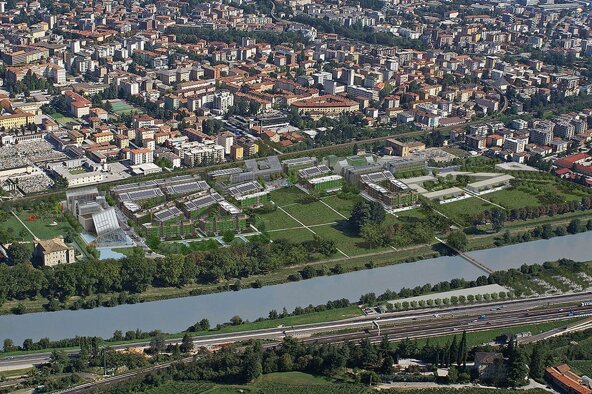
The former Michelin site in Trento, covering approximately 11 hectares, is restructured to support urban continuity, environmental performance, and future adaptability within the city.
Challenge
The main challenge was to convert a large post-industrial area into a coherent urban district, avoiding isolated architectural solutions and ensuring that different programmes and future transformations could occur within a stable spatial structure.
Key issues included:
- establishing clear rules for urban form and public space
- integrating mobility and parking without fragmenting the ground plane
- embedding landscape as an active component of urban and ecological systems
- connecting the new district to the river Adige as a strategic environmental asset
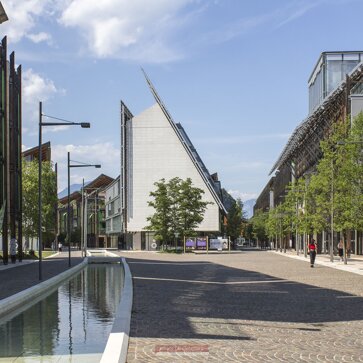
Landscape strategy
Landscape is conceived as urban ecological infrastructure, structuring public space, environmental systems, and everyday use.
A system of streets, squares, pedestrian and cycling routes forms the primary urban framework, supporting approximately 300 residential units and 30,000 sqm of office and retail space, matched by a public-realm system of comparable scale. Parking (around 2,000 spaces) is integrated below and within the urban fabric to preserve continuity at ground level.
The park system, covering approximately 5 hectares, represents a central structural element of the district. The main park opens directly onto the Adige river, incorporating the river corridor into the urban fabric and reinforcing ecological continuity, microclimate regulation, and public accessibility at city scale.
Landscape systems coordinate water management, vegetation, climate regulation, and public use, allowing the district to function as a flexible and resilient urban environment.
Role and responsibility
Landscape consultancy, including:
- integration of landscape within the urban and architectural framework
- coordination of public-space systems and environmental strategies
- contribution to ecological continuity and riverfront integration
- support for long-term spatial and environmental coherence
Value for the project
The project demonstrates how landscape can operate as urban infrastructure, enabling the transformation of a former industrial site into a coherent and adaptable city district.
By structuring public space, environmental systems, and the relationship with the river, landscape provides a durable framework capable of supporting change over time while maintaining spatial quality and ecological continuity.

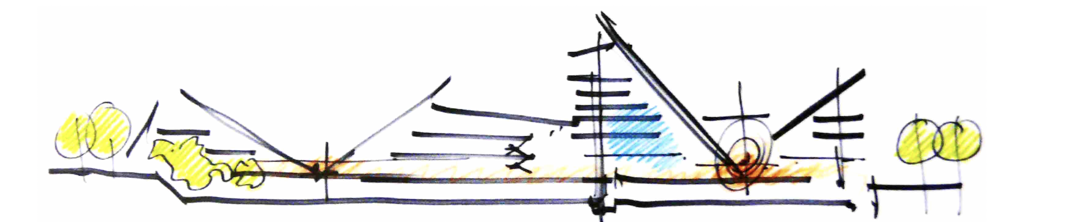
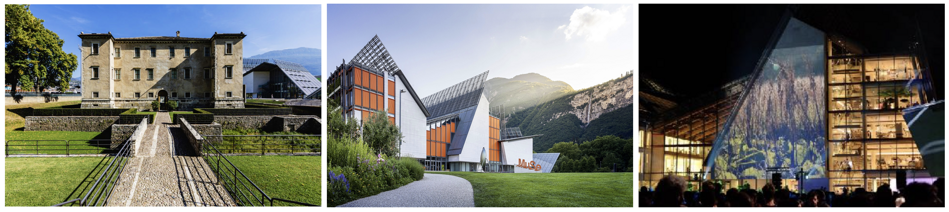
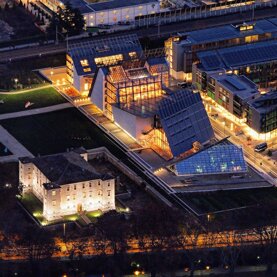
LANDSCAPE AND ECOLOGICAL SYSTEMS AS THE PRIMARY STRUCTURE FOR PUBLIC SPACE, MOBILITY AND URBAN FORM.
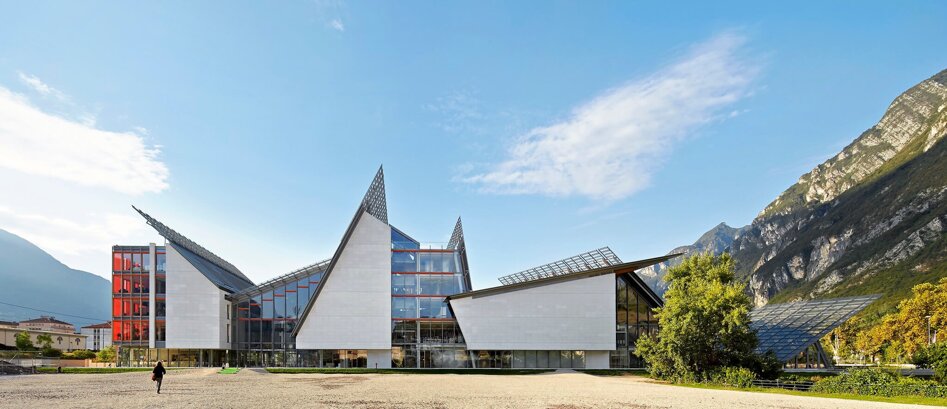
MUSE - Museum of Science
EMBEDDING A CULTURAL LANDMARK WITHIN AN URBAN LANDSCAPE SYSTEM
Location: Trento - Italy
Client: Renzo Piano Building Workshop - Genova
Period: 2007-2004
Project services: Landscape consultancy
Work progress status: Completed
Context
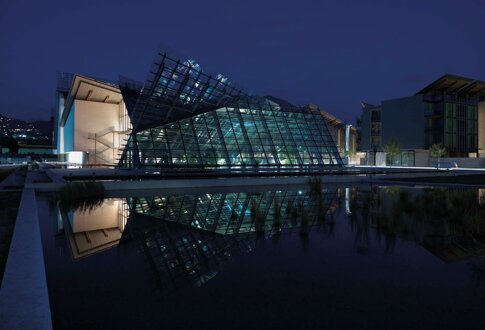
Within the Le Albere urban framework, MUSE – Museo delle Scienze di Trento functions as a civic and cultural anchor embedded in the same urban and ecological structure. Located at the northern edge of the site, the museum connects the Le Albere district, the riverfront park and the historic Palazzo delle Albere.
Challenge
The challenge was to integrate a major cultural institution within the district without isolating it as a standalone object, ensuring continuity between public space, pedestrian networks, landscape systems, and urban form.
Landscape strategy
Aligned with the district’s primary pedestrian axis, the building contributes to the continuity of public space across the site. At ground level, the central hall operates as a permeable civic interior, extending the public realm and enabling interaction between indoor and outdoor environments.
Landscape and environmental systems are integrated with the architectural form. The water basin at the base of the building supports microclimate regulation and reinforces spatial continuity between the museum, surrounding public spaces, and the river corridor.
Role and responsibility
Landscape consultancy, including:
- integration of landscape systems with the museum’s architectural framework
- coordination of public space and pedestrian connections
- contribution to microclimate regulation and spatial continuity.
Value for the project
Together, Le Albere and MUSE demonstrate a coherent approach to urban development in which cultural facilities are embedded within broader urban and ecological systems, supporting long-term adaptability, environmental performance, and public use.