©


ADDRESS
via di Campo marzio, 4
34123 Trieste, ITALY
tel. +39 040 2450325
info@erikaskabar.com
KEY PROJECT
Meolo junction - Venezia A4 Motorway
Strategic Access Node to the Adriatic Corridor
Location: Meolo, Venezia - Italy
Client: Managing company of motorway routes - Spa Autovie Venete; Delegated Commissioner for the emergence of mobility on the A4 motorway - Italy
Period: 2012-2010
Scope: Landscape consultancy, across Competition phase design, Developed Design and Construction Documentation
Consulents: Favero e Milan Ingegneria Spa - Structural engineering; Cost management; Studio TI - Rimini - MEP; Vidoni Spa; Brussi Costruzioni Spa - Construction
Project status: Completed
Brief description
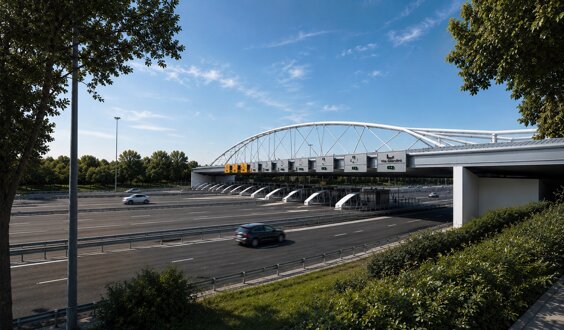
Located in the north-eastern quadrant of the interchange between the A4 motorway and the regional road SR89 Treviso Mare, the Meolo Junction operates as a strategic node connecting long-distance mobility flows with the Adriatic coastal system and regional transport networks.
The project combines transport infrastructure, hydraulic engineering and landscape design within a unified territorial framework. Beyond its technical function, the intervention was conceived as a landscape interface capable of mediating between infrastructure, environment and surrounding settlements.
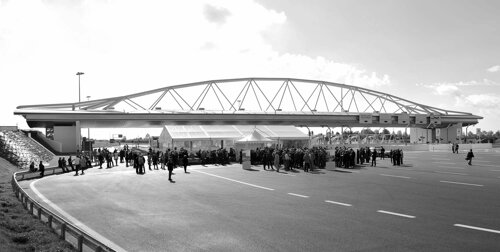
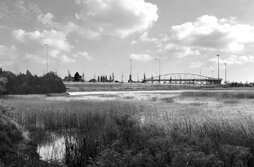
The works include a trumpet-type grade-separated interchange, a three-span motorway overpass, a toll plaza with dedicated oversized transport lanes, a park-and-ride facility, and a constructed wetland for stormwater management. Landscape engineering interventions comprise earth modelling, hydro-morphological restoration and ecological planting systems integrated with transport and water infrastructure.
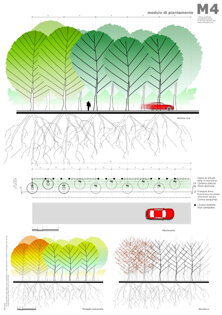
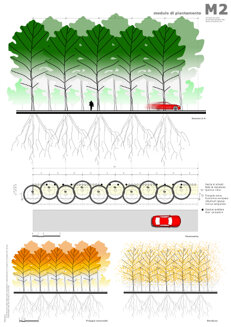
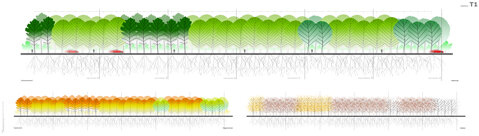
Landscape design plays a structuring role throughout the intervention, ensuring ecological continuity, hydraulic performance and visual integration across a highly engineered environment. More than 7.3 km of drainage channels and approximately 7,000 trees and shrubs contribute to acoustic mitigation, water management and long-term environmental coherence.
With a total investment of €34.8 million, the project was completed one year ahead of schedule, optimising construction time, cost control and resource coordination while establishing a durable landscape framework for a complex infrastructural setting.