©


ADDRESS
via di Campo marzio, 4
34123 Trieste, ITALY
tel. +39 040 2450325
info@erikaskabar.com

KEY PROJECT
PERIPHERY AND LANDSCAPE
WHAT IF THE PERIPEHERY IS NOT THE EDGE, BUT THE PLACE WHERE THE LANDSCAPE BECOMES LEGIBLE?
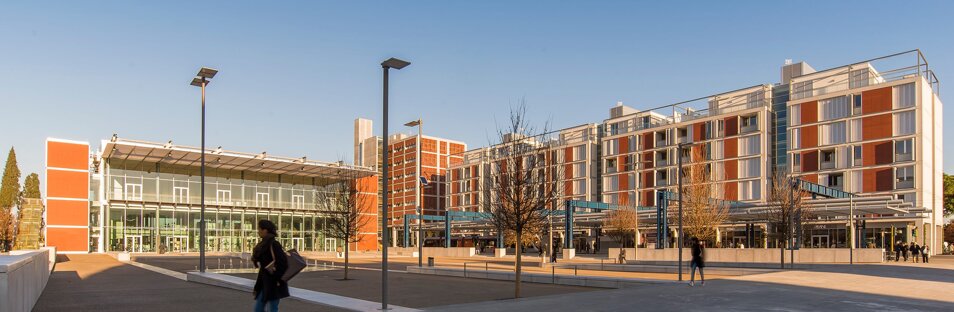
NEW CIVIC AND RESIDENTIAL CENTER
FROM PERIPHERY TO CORE: LANDSCAPE AS STRUCTURE
Location: Scandicci, Firenze - Italy
Client: Scandicci Centro Srl
Lead architect: Rogers Stirk Harbour & Partners - London
Period: 2013- 2003
Scope: Landscape General Project, across Schematic Design, Developed Design and Construction Documentation
Consultants: DA Studio Associato - Local architect; Politecnica Srl - Structural Engineering, MEP, Fire Engineering; Studio Zingoni - Cost management
Project status: Completed
Award: RIBA Award 2014 - European National Winner.
Context
The project forms part of a wider masterplan commissioned in 2003 to establish a recognisable civic centre within an area historically perceived as peripheral and fragmented.
The Nuovo Centro Civico di Scandicci, designed by Rogers Stirk Harbour + Partners, was developed between 2008 and 2013 on a site of approximately 26,000 m², with a total built area of around 15,500 m².
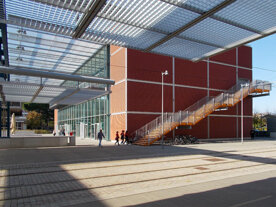
The introduction of the new tramline connection to Florence acted as the primary urban driver. The civic centre is organised around the Piazza della Resistenza, a 26,000 m² public space coinciding with the entire site area and directly served by a new tram station, concentrating public and private activities within a single, clearly legible urban structure.
The Project integrates a mix of uses—including residential, commercial, office and student housing, supporting the role of the civic centre as a multifunctional urban hub anchored by public space and mobility infrastructure.
Rather than treating the periphery as a marginal condition, the project engages this transitional zone—where mobility systems, public space and the built environment intersect—to articulate territorial structure and reinforce urban relationships.
Challenge
To support the masterplan by integrating transport infrastructure, public space and landscape systems into a coherent spatial structure, capable of giving legibility and continuity to a previously fragmented urban area.
Key issues included:
- coordination between tram infrastructure and public realm
- definition of a recognisable civic space within a peripheral context
- integration of landscape systems within a dense urban framework.
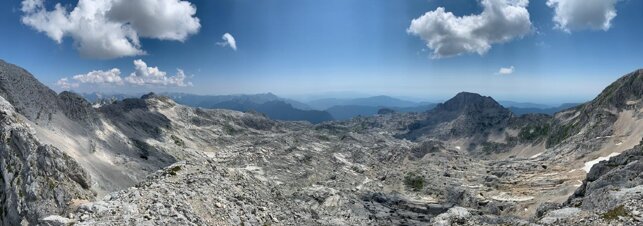
TRANSITIONAL ZONES REVEAL HOW TERRITORY IS STRUCTURED AND HOW URBAN AND LANDSCAPE SYSTEMS INTERACT.

Landscape strategy
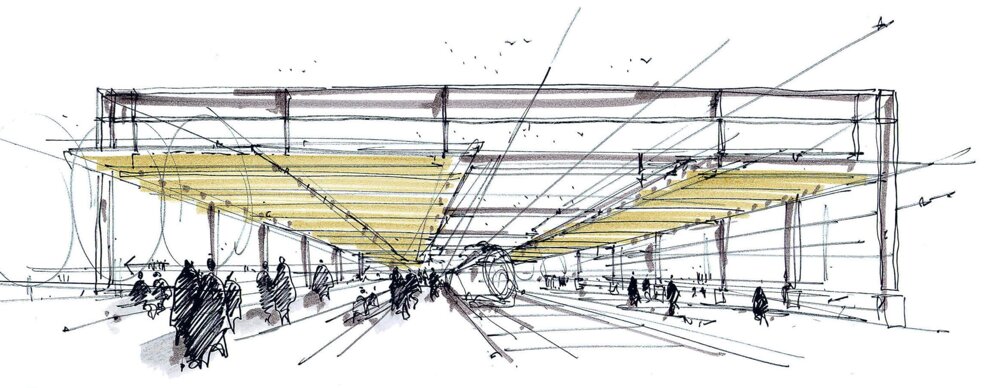
Landscape was developed as a unifying public-space system linking tram infrastructure and the piazza, and reinforcing a readable sequence of movement and stay.
Key spatial devices :
- Tramline as organising spine: the tram runs along the edge of the piazza; the station acts as a gateway, with a lightweight pergola structure connecting station and piazza.
- Piazza as civic ground: the landscape of the piazza extends through/under the ensemble, supporting continuity of the public realm.
- Linear landscape elements along the tram corridor: a linear arrangement of trees and benches helps unify the development and its movement line.
- Ground-plane continuity: parking is handled as part of the overall system, enabling the public ground to operate as continuous civic space.
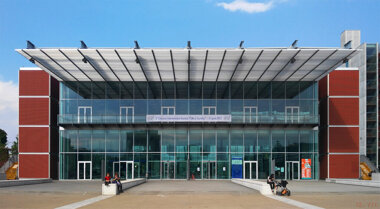
Environmental measures integrated with the masterplan include solar / photovoltaic elements and a green roof on the cultural building, contributing to the project’s sustainability strategy.
Role and responsibility
Landscape consultancy including:
- contribution to the landscape structure supporting the masterplan
- integration of open space systems with transport infrastructure
- coordination with architectural and urban design components.
Value for the project
The project demonstrates how a peripheral, transitional condition can be used to clarify territorial structure: at the interface between infrastructure (tramline/station) and public space (piazza), spatial relationships become readable and usable, supporting a new civic centre rather than residual “edge” space.